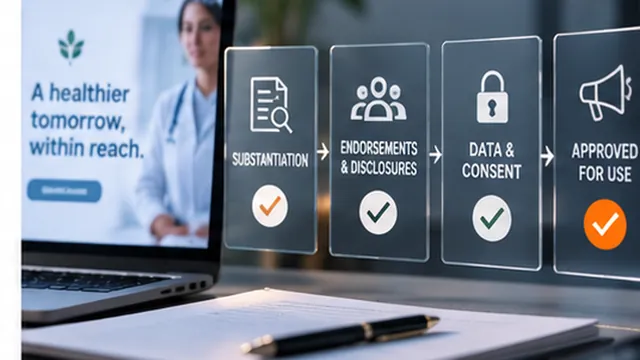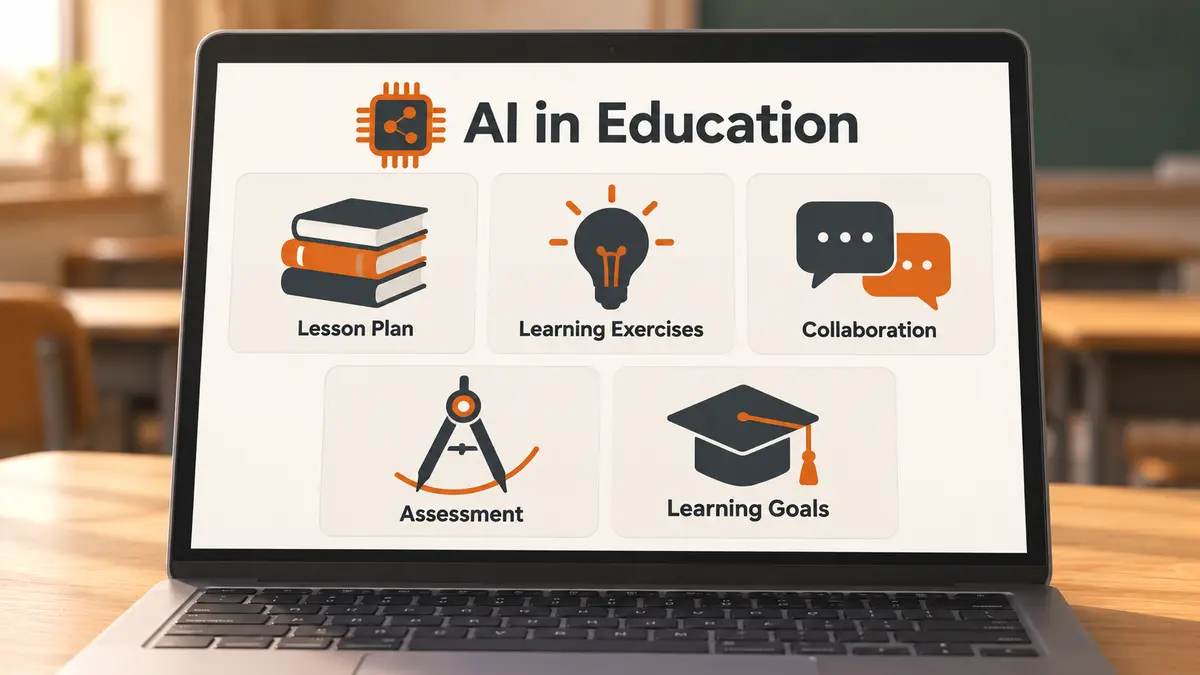
On January 19, 2026, England’s Department for Education expanded its safety standards for educational generative AI. The additions addressed cognitive development, emotional and social development, mental health, and manipulation.
The updated framework asks a question that an accurate answer alone cannot settle: how should an educational AI product behave while helping a student?
A tool can solve the problem correctly and still do the thinking the student was supposed to practice. It can sustain a conversation without serving the lesson. England’s approach makes those distinctions matters for product design and evaluation. Other regulators have a useful model to examine, even where particular safeguards require stronger evidence.
The Expectations Follow the Product to the School
The guidance applies to England, rather than establishing a uniform UK education framework. It principally addresses developers and suppliers serving schools and colleges, and gives institutions criteria for assessing products.
These are government standards and guidance. Their individual provisions should not all be presented as freestanding statutory duties. The Department frames them as an aid to existing obligations: using them “could help schools and colleges comply with” other requirements, and meeting them “could help edtech developers or suppliers comply with” theirs. Applicable data-protection, safeguarding, and other legal requirements require their own analysis.
The standards’ introduction assigns assurance responsibility to the supplier dealing directly with the institution, including where protections depend on upstream components.
That allocation matters when an educational company builds an application around another company’s model. The purchaser needs evidence about the finished product. A description of the underlying model does not establish how the application handles student interactions, applies restrictions, or delivers alerts to school staff.
Helping a Student Differs From Completing the Task
The cognitive-development provisions expect progressive hints and a genuine learner attempt before full solutions, with specified exceptions. Products should not provide final answers, full solutions, or complete worked examples unless an exception applies.
Consider a hypothetical student who asks a mathematics tutor to complete an assignment. The product returns correct solutions. Its answer quality is excellent. But the teacher intended the student to practice choosing a method and working through the calculation.
The educational outcome depends on what the student does, not simply on whether the software’s answer is correct. A purchaser could test this distinction by asking the supplier to demonstrate how the tool responds to requests for immediate answers, repeated requests for help, and an incorrect first attempt.
Those are suggested evaluation questions. They turn a design expectation into observable behavior without assuming that every lesson needs the same sequence of hints.
Engagement Needs an Educational Purpose
The emotional-development provisions discourage relationship-building and personhood cues, while allowing bounded educational roleplay. They include enforced session limits, recorded teacher overrides, and safeguarding alerts for concerning patterns.
The manipulation provisions address flattery, unjustified certainty, social pressure, inappropriate promises of reward, inducement of guilt or fear for motivational purposes, deceptive interfaces, and commercial engagement tactics. Transparent, low-stakes, educationally justified rewards remain permitted.
These provisions invite a different purchasing conversation from one focused on how long students use a product. More engagement does not, by itself, establish more learning.
In the hypothetical, the school could examine what happens when the student disagrees with the tutor or tries to end the session. Does the software correct an error, explain uncertainty, and allow the student to leave? Or does the interaction reward agreement and draw the student into another exchange without a clear instructional purpose?
A regulator borrowing this approach should distinguish a transparent educational incentive from pressure that exploits a child’s vulnerabilities. The task is to define and test the relevant behavior. A broad instruction to avoid manipulation leaves too much unresolved if developers and purchasers cannot identify what would count as a failure. The Department says as much itself: the listed expectations “are the minimum expected but are not exhaustive.”
Blocking Content Is Only Part of Safeguarding
The filtering standards expect embedded protection across conversations, languages and images, maintained whenever a product is accessed through an educational institutional account regardless of the device used, including bring your own device. The mental-health section addresses distress detection, human support, escalation, specialist input, and a published crisis protocol.
For a school, this creates a practical distinction between preventing an inappropriate output and responding to a student disclosure. A blocked answer does not establish that a concerning disclosure reached someone able to help.
Suggested purchasing questions follow directly. Who receives an alert? Has that person’s contact information been verified? What happens outside school hours? What happens if the notification fails? How does the student learn what the tool can and cannot provide?
Testing should examine the complete response, including the institution’s part. A supplier can demonstrate that a message was sent. The school must establish who receives it and what that person is expected to do.
The Harder Safeguard Needs a Stronger Evidence Claim
There is a material difference between checking that a session ends at a configured limit and establishing that software reliably detects emotional dependence. The first is an observable control. The second depends on an inference about a learner.
Ordinary enthusiasm, repeated help-seeking, and a genuine safeguarding concern are not interchangeable. A detection system needs evaluation for missed concerns and unnecessary escalation. It also needs evidence appropriate to the ages, languages, disabilities, and circumstances of the students using it.
Monitoring creates a related privacy question. Gathering more intimate information is not automatically a proportionate way to make a tutoring product safer. A school should ask what is collected, why it is needed, who can access it, and how long it remains available.
The Department’s separate position on generative AI in education acknowledges limited evidence about developmental effects, educational outcomes, and classroom safety. The existence of a standard therefore should not be mistaken for evidence that every expected capability has been validated.